
Table of Contents
Do you ever find yourself unloading your dishwasher and realizing your dishes really aren’t that clean? Random speckles of food particles in your glassware, spaghetti sauce and bits of food still caked onto your plates. Or maybe there’s some foul smell coming from your dishwasher. It can be super frustrating, and it might be time to clean your dishwasher.
Shop Dishwashers Well, when was the last time you cleaned it? Cleaning your dishwasher is something that you should be doing regularly in order to keep it up and running at maximum efficiency! Thankfully, cleaning your dishwasher is a process that takes minimal effort. Here’s our beginner’s guide on how to clean your dishwasher.
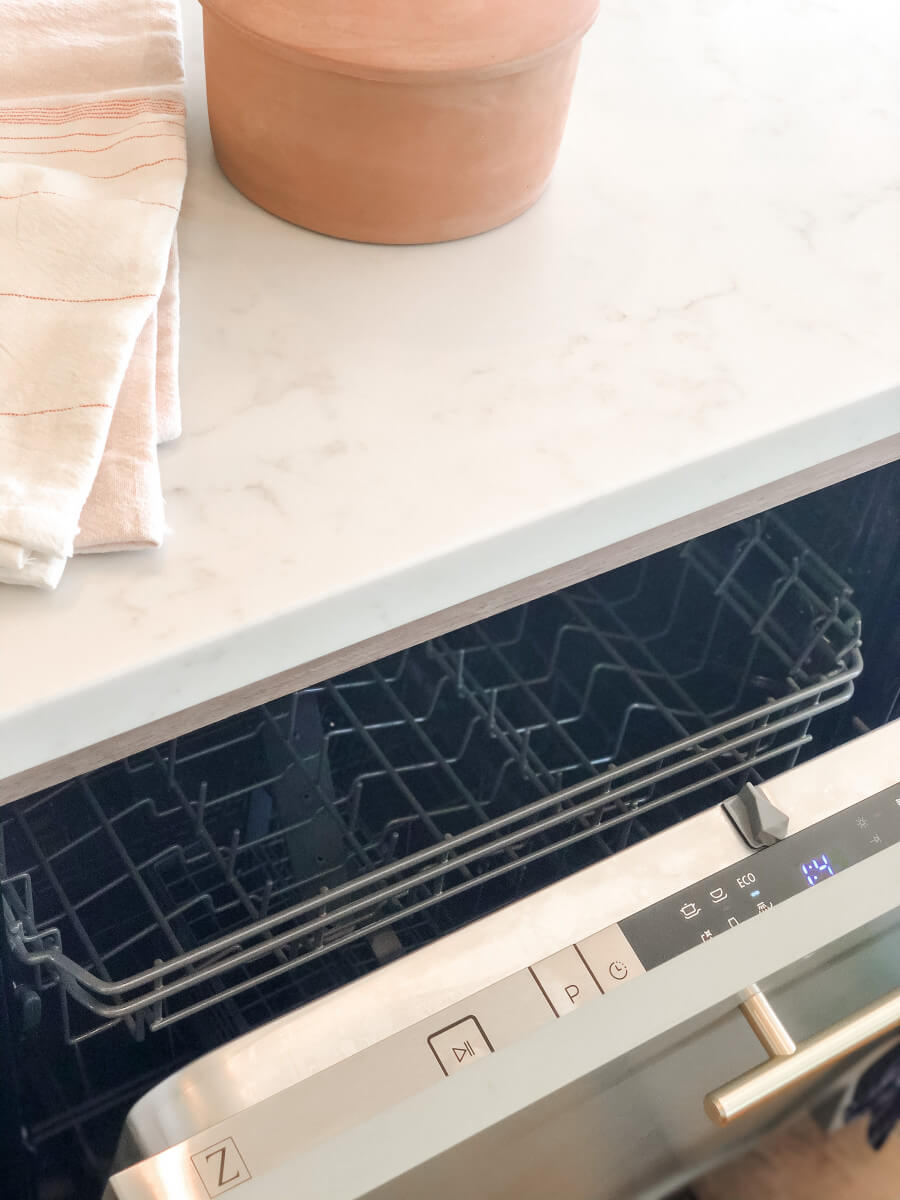
When you might need to clean your dishwasher
Cleaning your dishwasher probably isn’t something you think about too often, but giving it a proper cleaning at least once every few months is essential. Food isn’t always cleared after each cycle, and it can quickly build up, causing your dishwasher to clog, smell bad, and leave your dishes looking gross!
Cleaning Option 1
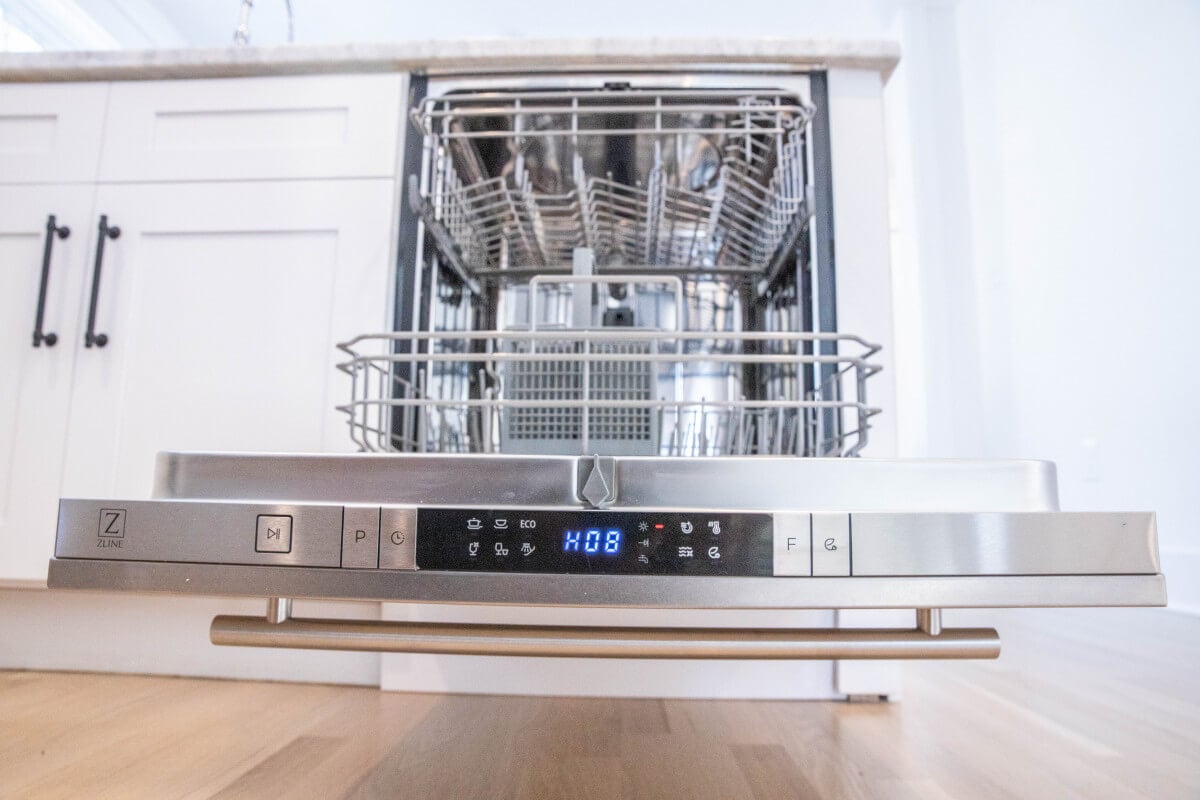
The first thing you’ll want to do is remove all racks from inside your dishwasher. With the racking removed, inspect around the dishwasher drain and filter, and clean up any gunk or food residue you see. Next, we’re going to remove the dishwasher filter. In most modern dishwashers, you should be able to remove the filter with a simple turn of the filter and with a standard screwdriver. If you’re unsure, be sure to look up the proper instructions in your dishwasher’s user manual.
Let the filter soak in a bowl of hot soapy water, and then gently scrub with a toothbrush or other bristle-based scrub with similar strength. Be sure to properly reinstall the filter on the bottom of the dishwasher.
Next, you’ll want to check the spray arms of your dishwasher. Go over them with hot soapy water and be sure to poke all the holes with a pipe cleaner to ensure there are no blockages or build-ups in the spray arms.
If you’re more of a visual learner, we highly recommend checking out this great how-to walkthrough from Appliance Educator. They have lots of great informational videos for all types of home improvement and DIY projects.
Cleaning Option 2

If you find yourself completing option 1, but your dishwasher still has unwanted grime or gunk Option 2 might be a bit more helpful in giving your dishwasher a deep clean.
Grab a cup of white vinegar in a dishwasher-safe bowl, and place it on the top rack of your dishwasher. Run your dishwasher on its hottest setting. After the cycle ends, skip the drying cycle and let your dishwasher air dry.
Once the dishwasher is dry, sprinkle some baking soda on the floor of the dishwasher, and run for a short cycle on the hottest setting. Again, skip the drying cycle and let your dishwasher air dry.
What not to do.
We advise steering clear of harmful chemicals when you’re cleaning the inside of your dishwasher, especially if your dishwasher has stainless steel parts. Chemicals like bleach can destroy the finish and ruin your dishwasher.
Don’t forget about the outside of your dishwasher.
While the inside is the most crucial part of cleaning your dishwasher, don’t neglect the dishwasher door! If your dishwasher has a stainless steel door, we suggest using ZLINE Stainless Steel Cleaner and Polish (STCLT-8). For most other finishes, soapy water should do the trick, but if you’re unsure, we advise looking into your user manual for more information.
ZLINE Stainless Steel Cleaner and Polish (STCLT-8)

$19.95
Luxury isn’t meant to be desired - it’s meant to be attainable. ZLINE Stainless Steel Cleaner and Polish (STCLT-8) helps you preserve a pristine shine and high-quality finish by easily eliminating fingerprints, dissolving grease, and removing streaks, smudges, and even… Read More
If You’re In The Market

If you find your dishwasher isn’t performing up to your expectations, we offer the best upgrade options in both 18” and 24” sizes: The ZLINE 18” & 24" Top Control Dishwasher.
Both dishwashers are top of the line and boast an easy-to-read top control panel that features 6 different cleaning cycles. The dishwashers are ENERGY STAR compliant and feature eco-friendly settings that save energy and water consumption up to 30%.
Shop DishwashersTwo of the main reasons why we love these dishwashers are their low noise levels and the customization options that are available thanks to their panel-ready design. You can even install your own custom-approved panel to seamlessly match your cabinetry or other finishes within your kitchen.
We hope these tips help the next time you clean out your dishwasher. If you have any questions or need help with purchasing a new one, please reach out to us, and we’d be happy to assist.
FAQs
How often should you clean your dishwasher?
Most dishwashers should be cleaned every two to three months. If you use your dishwasher daily or notice odors, residue, or cloudy dishes, more frequent cleaning may be necessary.
What are the signs that a dishwasher needs to be cleaned?
Common signs include food particles left on dishes, cloudy glassware, lingering odors, slow drainage, or visible buildup around the filter, drain, or spray arms.
Why does a dishwasher get dirty if it cleans dishes?
Dishwashers trap food particles, grease, soap residue, and minerals from hard water. Over time, these materials build up in filters, spray arms, and internal components, reducing cleaning performance.
What is the first step to cleaning a dishwasher properly?
Start by removing the racks and inspecting the drain and filter area. Clearing food debris and residue from these components is essential before running any cleaning cycles.
How do you clean a dishwasher filter?
Remove the filter according to the manufacturer’s instructions, soak it in hot soapy water, and gently scrub it with a soft brush or toothbrush. Rinse thoroughly and reinstall it securely.
Should spray arms be cleaned?
Yes. Spray arms can become clogged with food debris and mineral buildup. Cleaning them with hot soapy water and clearing the spray holes with a pipe cleaner ensures proper water flow.
Is vinegar safe to use when cleaning a dishwasher?
Yes, white vinegar is a safe and effective natural cleaner for dishwashers. It helps break down grease, soap residue, and odors when used properly.
How do you deep clean a dishwasher with vinegar and baking soda?
Place a bowl of white vinegar on the top rack and run a hot cycle. Afterward, sprinkle baking soda along the bottom of the dishwasher and run a short hot cycle to deodorize and remove remaining residue.
Can baking soda damage a dishwasher?
No, baking soda is gentle and safe when used occasionally. It helps neutralize odors and loosen buildup without harming internal components.
What cleaning products should you avoid using in a dishwasher?
Avoid harsh chemicals such as bleach or abrasive cleaners, especially in dishwashers with stainless steel interiors or components, as they can damage finishes and internal parts.
Why does my dishwasher still smell after cleaning?
Persistent odors may indicate trapped food debris in the filter, drain, or door seals. Rechecking these areas and repeating a deep clean cycle usually resolves the issue.
Should the dishwasher door and exterior be cleaned too?
Yes. The door, seals, and exterior collect fingerprints, grease, and grime. Cleaning these areas improves hygiene and keeps the appliance looking new.
What should be used to clean a stainless steel dishwasher exterior?
A stainless steel cleaner or polish designed for appliances works best. Mild soapy water can also be used, but it should be followed by thorough drying to prevent streaks.
Can regular dishwasher cleaning improve performance?
Yes. Routine cleaning helps restore proper water circulation, improves drying results, reduces odors, and extends the lifespan of the dishwasher.
When should you consider replacing your dishwasher instead of cleaning it?
If your dishwasher continues to perform poorly despite regular cleaning, shows signs of mechanical failure, or no longer meets your needs in terms of noise level or efficiency, it may be time to upgrade.
Does cleaning your dishwasher help save energy and water?
Yes. A clean dishwasher runs more efficiently, allowing cycles to complete properly and reducing the need for rewashing dishes, which saves both energy and water over time.
Is cleaning a dishwasher difficult?
No. Most dishwasher cleaning tasks are simple, require minimal tools, and can be completed in under an hour, making routine maintenance easy to incorporate into regular home care.