Table of Contents
- Why Wood is Back in Kitchen Design
- Wood Tones and Appliance Pairings Cheat Sheet
- How to Pair Wood Tones with Mood and Materials
- Choosing Between Solid Wood and Veneer
- Maintenance and Durability in Natural Kitchens
- Beyond the Cabinets: Adding Natural Accents
- Integrating Nature with Innovation in Kitchen Design
- FAQs
It’s official: wood has made its comeback to the world of high-end kitchen design. The movement back toward began with the emergence of biophilic design (bringing the outdoors in), which has evolved from just a buzzword to a common feature in the world of high-end kitchen design.
Luckily, biophilic design isn’t as complicated as the name implies, and with it, anyone can approach rustic and farmhouse-inspired kitchen designs.
If you’re looking to refresh your kitchen the biophilic way, here are some easy recommendations on how to incorporate wood and other natural elements into a kitchen that feels grounded, luxurious, and timeless.
Why Wood is Back in Kitchen Design
The shift we saw back toward using wood in kitchens had a lot to do with aesthetics and may have been a reaction to the sterile kitchens of the previous decade. We’ve collectively realized that wood can make a kitchen feel alive.
Incorporating natural elements such as raw wood grain, unpolished stone, and tactile metals creates a sensory experience that is impossible to recreate with other materials and helps make your kitchen feel like it has a heartbeat.
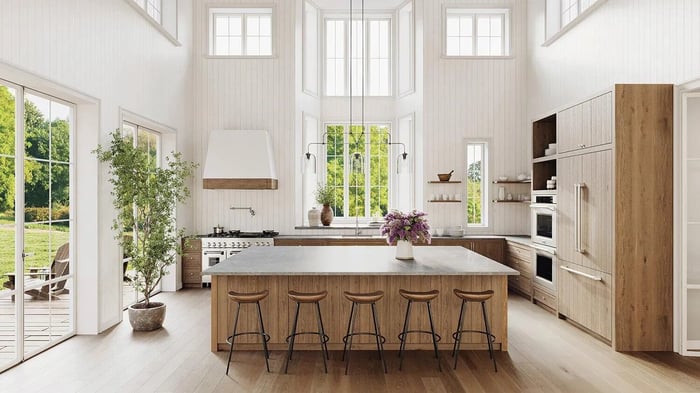
Wood Tones and Appliance Pairings Cheat Sheet
The key to making a wood kitchen design look intentional instead of like a basement from the seventies is in the pairing. Here is a cheat sheet that covers some easy ways to match your wood choice with the right textures and tech:
Wood Tone | Mood & Vibe | Best Appliance Finish Match |
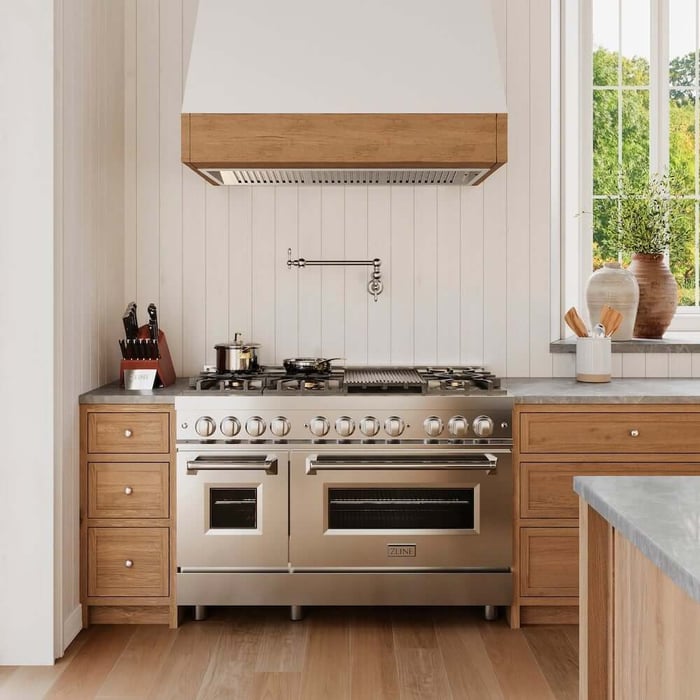
Light (Maple, Ash, White Oak) | Airy, Scandi-minimalist, and bright. | Stainless Steel: Keeps things crisp and professional without adding visual weight. |
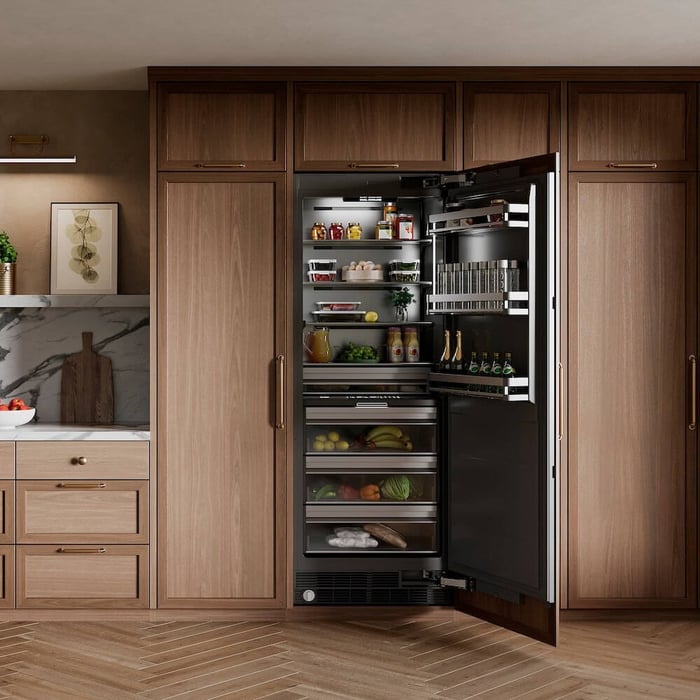
Rich (Cherry, Red Oak, Mahogany) | Traditional, sophisticated, and stately. | Panel-Ready: Let the wood grain do the talking by hiding the dishwasher and fridge behind matching panels. |
Dark (Walnut, Ebony, Smoked Oak) | Moody, industrial, and high-end luxury. | Black Stainless or Black Satin: Adds a bold, velvety contrast that feels timeless. |
How to Pair Wood Tones with Mood and Materials
Design intent only works if it translates into physical decisions. Start by choosing your dominant wood tone, then build outward using contrast and restraint.
Light woods like maple, ash, or white oak create an open, Scandinavian-leaning mood. To keep that look intentional, pair them with stainless steel appliances and clean-lined hardware. The goal is contrast without visual weight. Avoid overly ornate fixtures, since they compete with the simplicity of the wood grain.
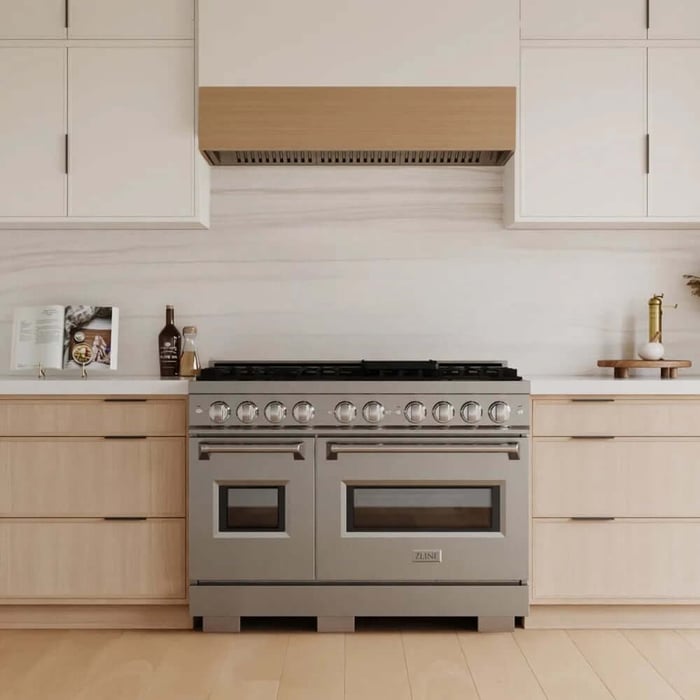
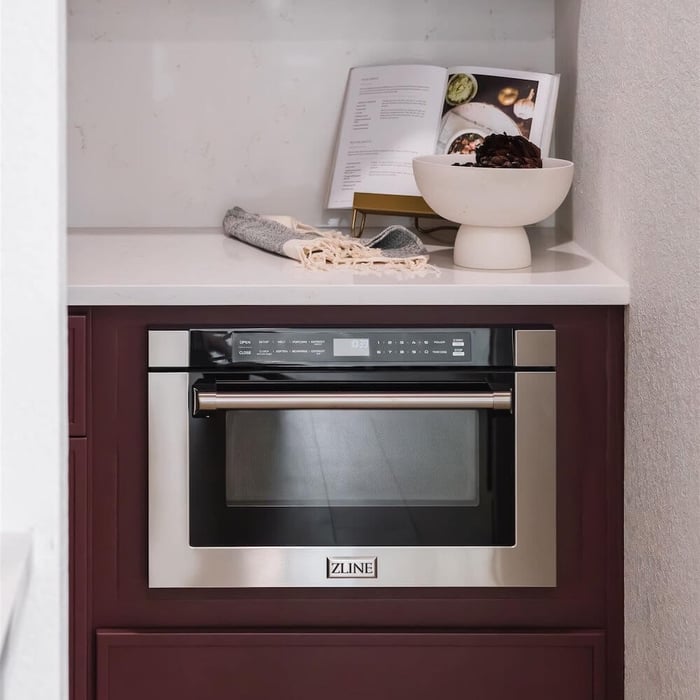
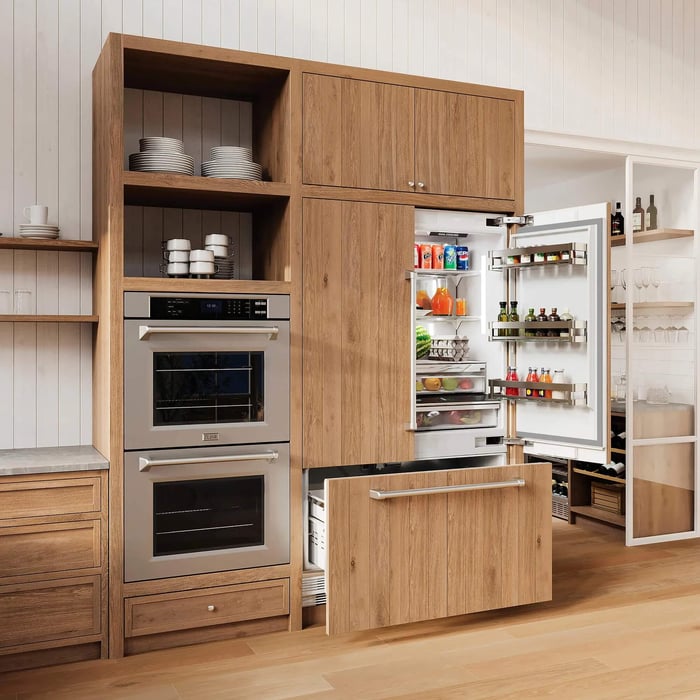
Mid-tone and rich woods such as cherry or red oak introduce warmth and tradition. These benefit from panel-ready appliances or integrated designs, which allow the cabinetry to carry the visual load. If appliances stand out too much here, the kitchen starts to feel fragmented instead of cohesive.
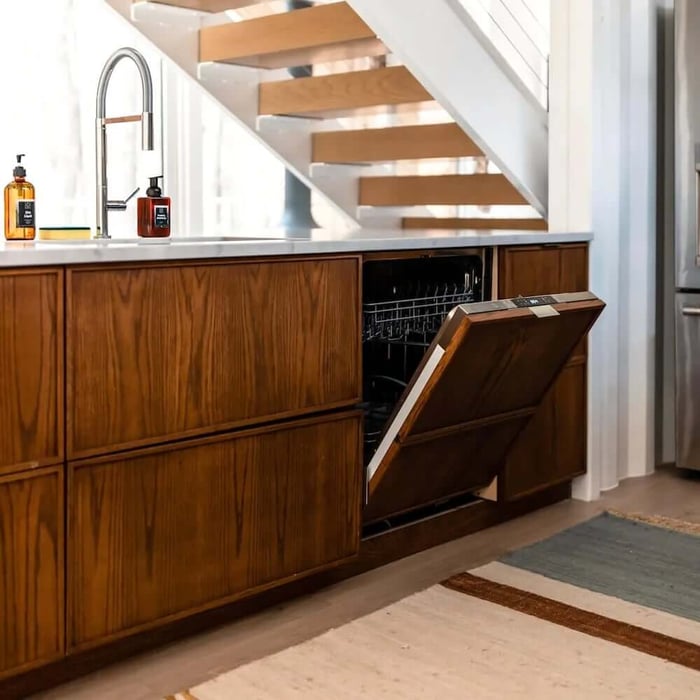
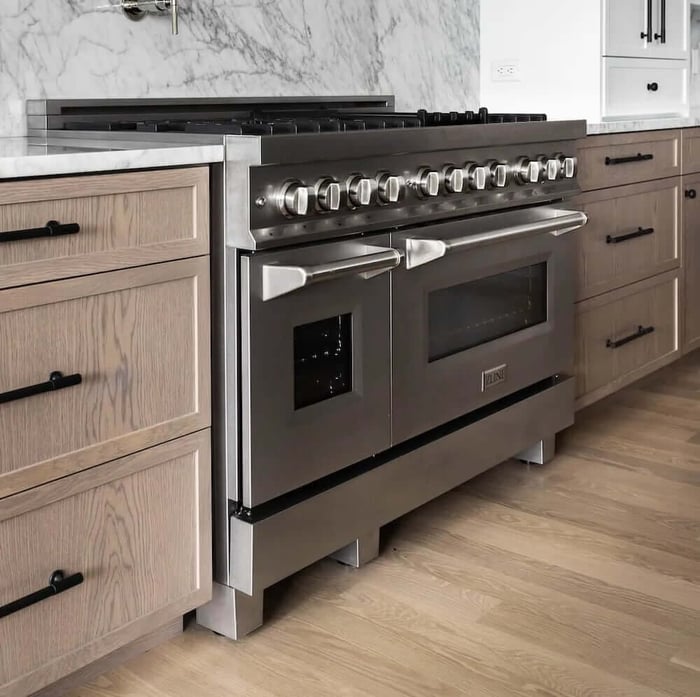
Dark woods like walnut or smoked oak shift the mood toward high-end and dramatic. These work best with matte or black stainless appliances that echo the depth of the wood. The key is consistency. If you introduce too many competing finishes, the space loses that controlled, luxurious feel.
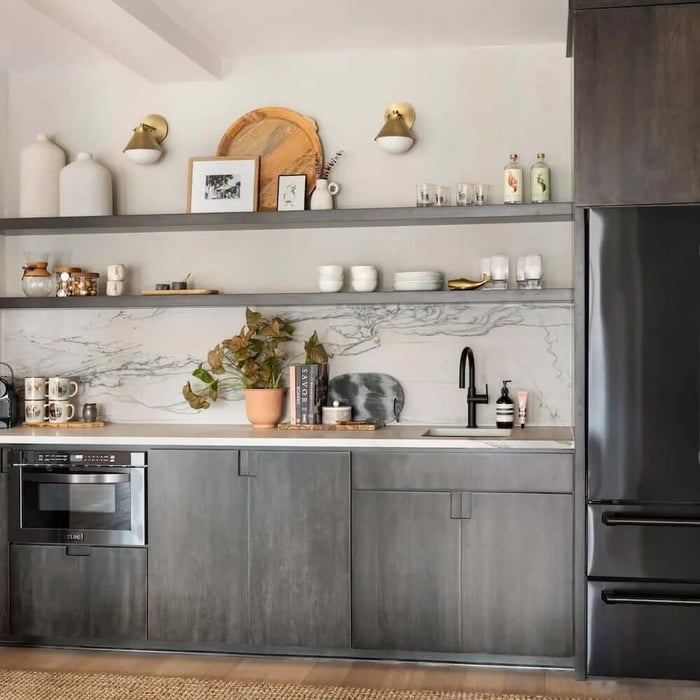
Black Stainless Steel Appliances
The practical rule is this: one dominant tone, one supporting material, one contrasting element. For example, walnut cabinetry, a marble backsplash, and black hardware. Anything beyond that starts to dilute the design.
Execution comes down to sequencing decisions correctly. Start with cabinetry or the largest wood surface first, since that dictates everything else. Once that’s locked, choose your countertop to either blend (for calm) or contrast (for visual interest).
From there, layer in secondary wood elements intentionally. Floating shelves, islands, or ceiling beams should either match your primary tone or clearly contrast it. Avoid “almost matching,” which reads as a mistake rather than a choice.
Appliances and fixtures come last, not first. This is where many kitchens go wrong. Treat finishes like a supporting cast. Stainless steel sharpens lighter palettes, black finishes ground darker ones, and panel-ready options remove visual noise entirely.
Finally, introduce organic accents sparingly. One or two natural materials, such as stone, linen, or copper, reinforce the biophilic feel without turning the space into a theme.
ZLINE Convertible Vent Wooden Wall Mount Range Hood in Walnut (KBRR)

$872.99
$969.99
The ZLINE KBRR is a Designer Series Wooden Wall Mount Range Hood with a modern design and built-to-last quality that would make it a great addition to any home or kitchen remodel. The walnut hand-finished wood is made from solid… Read More
Choosing Between Solid Wood and Veneer
This decision is less about aesthetics and more about performance and budget.
Solid wood offers authenticity and long-term value. It can be sanded, refinished, and repaired over time, which makes it ideal for homeowners planning to stay long-term. However, it is more susceptible to expansion and contraction with humidity changes, which can lead to warping if not properly sealed.
Veneer, when done well, is often the smarter choice for modern kitchens. It provides a consistent grain pattern, resists warping, and is typically more cost-effective. High-quality veneer over plywood or MDF is also more stable in environments with fluctuating temperatures and moisture, like kitchens.
The practical takeaway is straightforward. Use solid wood for statement pieces where longevity and texture matter most, and veneer for larger surface areas where consistency and stability are critical.
Maintenance and Durability in Natural Kitchens
A biophilic kitchen only works if it holds up to daily use. Wood is durable, but it requires the right finish and care.
Sealed finishes such as polyurethane offer the highest protection against moisture and stains, making them ideal for cabinetry. Oil finishes provide a more natural look but require regular maintenance and reapplication, especially in high-touch areas.
Avoid excessive moisture exposure. Wipe spills quickly, especially around sinks and dishwashers, where wood is most vulnerable. Use proper ventilation, like a well-functioning range hood, to reduce grease and humidity buildup that can degrade finishes over time.
For cleaning, stick to mild soap and a damp cloth. Harsh chemicals strip protective coatings and dull the grain. Over time, small maintenance habits make the difference between a kitchen that ages gracefully and one that deteriorates unevenly.
Beyond the Cabinets: Adding Natural Accents
You don’t have to commit to an all-wood kitchen to reap the benefits. Another approach to biophilic design is "natural layering," which lets whatever elements you want to prioritize take center stage:
Mixed Materials: Pair thick wooden floating shelves with a cold marble backsplash. The contrast between warm and cool stands out.
Statement Islands: Use a different wood species for your kitchen island than your perimeter cabinets. A reclaimed wood island serves as a functional piece of art.
The Fifth Wall: We’re seeing more wood-beamed ceilings or wood-paneled range hoods to draw the eye upward and soften the acoustics of the room.
Don’t be afraid to mix metals either. Something like a hand-hammered copper range hood paired with walnut cabinetry can create an unexpected, rich, and organic warmth that standard steel just can't match.
Integrating Nature with Innovation in Kitchen Design
The goal of a biophilic kitchen is to have it look organic but act high-tech. This is where the finish of your appliances becomes your secret weapon.
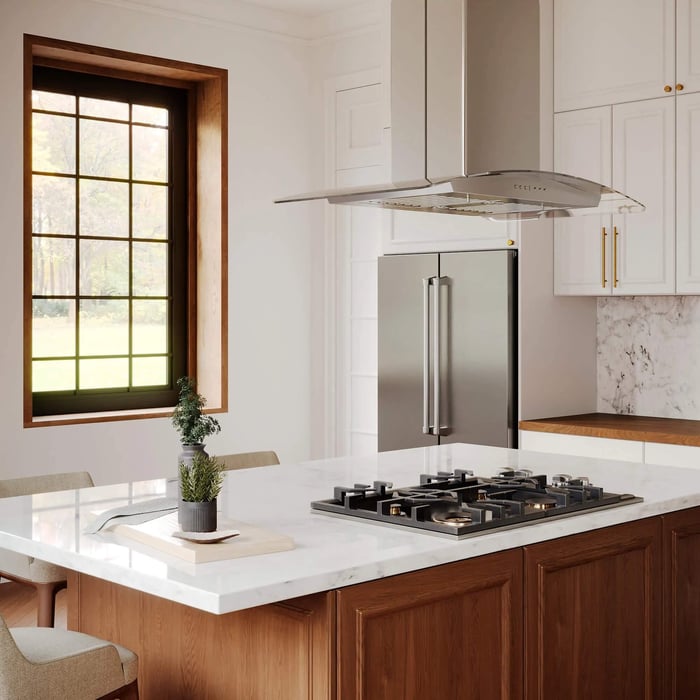
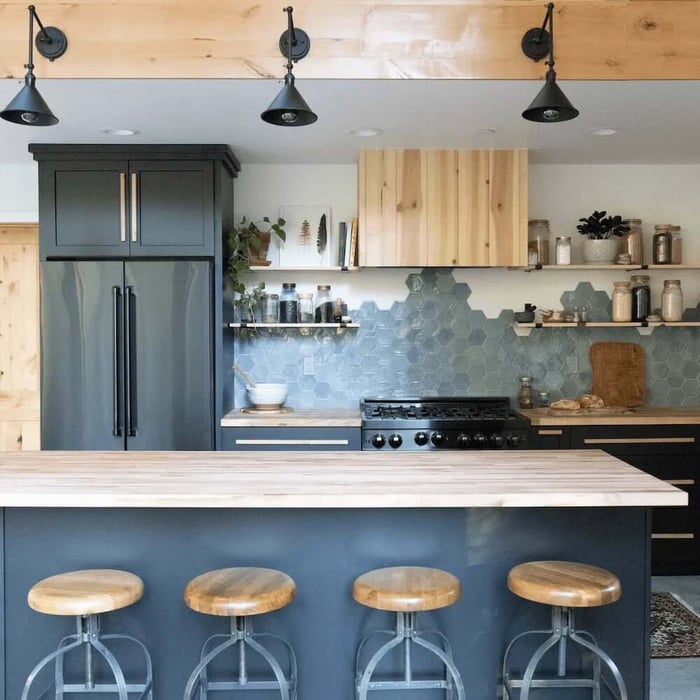
If you are going for a rustic or farmhouse feel, the stainless steel and white matte appliance finishes add a soulful, artisanal touch. If you prefer a more contemporary look and are using a darker wood such as dark oak, appliance finishes like black stainless and black satin both provide depth that complements the darker wood’s texture.
By selecting finishes that bridge the gap between natural and luxurious, you create a space that looks like a showroom and feels like home.
If you’re ready to explore appliances that are perfect for biophilic kitchen design, call us at 1 (877) 529-5413 or book a consultation with one of our product experts!
Connect with us on social media!
FAQs
What is biophilic kitchen design?
Biophilic kitchen design focuses on incorporating natural elements like wood, stone, and organic textures to create a space that feels connected to nature. Instead of sterile, overly polished environments, this approach prioritizes warmth, texture, and sensory depth, resulting in a kitchen that feels more lived-in and inviting.
Why is wood making a comeback in high-end kitchens?
Wood reintroduces warmth and character that many modern kitchens lost during the ultra-minimalist phase. Natural grain, variation, and texture create visual interest and make the space feel more dynamic and grounded. It also aligns with broader design trends that favor authenticity over artificial finishes.
How do I choose the right wood tone for my kitchen?
Start by defining the mood you want. Light woods like maple or white oak create an airy, minimalist feel. Rich woods like cherry or red oak lean traditional and warm. Dark woods like walnut or smoked oak create a dramatic, high-end look. Once your tone is selected, build the rest of your design around it rather than mixing multiple competing wood finishes.
What appliance finishes work best with different wood tones?
Pairing is critical to avoid a mismatched look. Stainless steel works best with light woods because it adds contrast without heaviness. Panel-ready appliances are ideal for mid-tone woods since they allow cabinetry to dominate visually. Black stainless or matte black finishes complement dark woods by reinforcing depth and cohesion.
What is the biggest mistake to avoid when designing with wood?
The most common mistake is mixing too many tones and finishes. A strong design typically follows a simple structure: one dominant wood tone, one supporting material like stone, and one contrasting element such as metal hardware. Anything beyond that can make the space feel visually chaotic instead of intentional.
Should I choose solid wood or veneer for my kitchen?
Solid wood is ideal for long-term durability and can be refinished over time, making it a strong choice for statement pieces. Veneer, especially high-quality veneer over plywood or MDF, offers better stability in environments with moisture and temperature changes. It is often the more practical option for larger surfaces.
How do I maintain wood surfaces in a kitchen?
Regular maintenance is straightforward but important. Use a soft cloth with mild soap for cleaning and avoid harsh chemicals that can damage finishes. Wipe up moisture quickly, especially near sinks and dishwashers. Sealed finishes like polyurethane offer the most protection, while oil finishes require more frequent upkeep.
Can I incorporate biophilic design without fully remodeling my kitchen?
Yes, you can introduce natural elements incrementally. Adding wooden floating shelves, incorporating a statement island, installing a wood-accented range hood, or even layering in materials like stone or copper can create a biophilic effect without a full renovation.
How do I balance natural materials with modern appliances?
The key is sequencing. Choose your wood and primary materials first, then select appliance finishes that complement rather than compete. Stainless steel sharpens lighter designs, while black or panel-ready appliances help maintain a cohesive, grounded look in darker or more traditional kitchens.
Is a biophilic kitchen practical for everyday use?
Yes, as long as materials are chosen and maintained properly. Modern finishes and engineered materials make it easier than ever to achieve a natural look without sacrificing durability. With proper ventilation, sealing, and routine care, a biophilic kitchen can perform just as well as any contemporary design while offering a richer visual experience.