Table of Contents
For decades, the microwave was the "clunky box" we tucked into a corner or mounted above the stove. But as kitchen design shifts toward open layouts, clean sightlines, and better workflow, microwave drawers have emerged as a modern solution that balances both aesthetics and practicality.
If you’re remodeling or simply looking to reclaim your prep space, here is why a microwave drawer might be one of the smartest upgrades you can make in your kitchen.
Reclaim Your Counter Real Estate
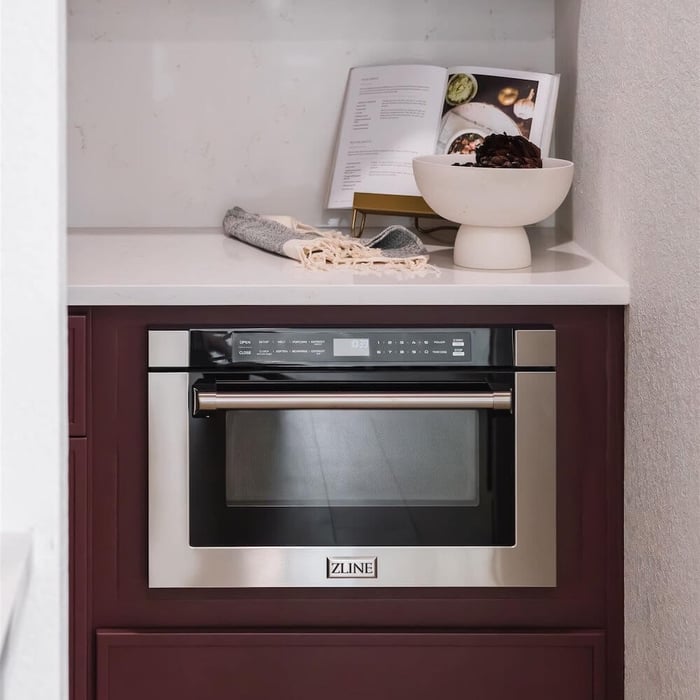
The most immediate benefit of a drawer-style microwave is the disappearing act. Traditional microwaves are space hogs, often sitting directly where you need to chop vegetables, plate food, or set down groceries.
By integrating the unit into lower cabinetry or a kitchen island, you create a kitchen environment that feels far more open and intentional. Removing a bulky countertop appliance instantly contributes to a cleaner aesthetic, especially in kitchens designed around custom cabinetry and uninterrupted counter surfaces.
This approach also significantly expands usable prep space. In smaller kitchens where every inch of countertop matters, relocating the microwave below the counter can free up valuable workspace for cooking, baking, and food preparation.
Just as importantly, removing an over-the-range microwave opens the door to more expressive design choices. Homeowners can install statement range hoods, decorative tile backsplashes, or custom ventilation solutions that elevate the overall look of the kitchen.
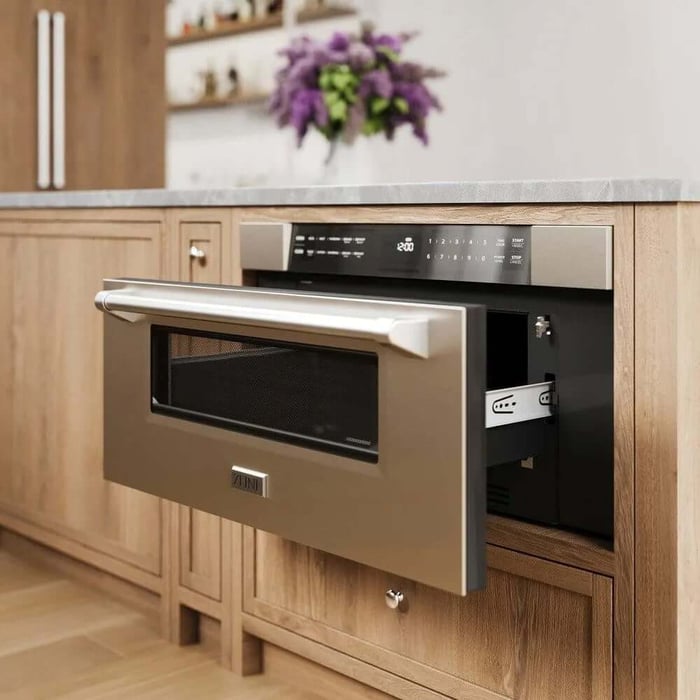
ZLINE 30 in. 1.2 cu. ft. Stainless Steel Built-In Microwave Drawer (MWD-30)

$1,479.99
$1,849.99
Luxury isn't meant to be desired - it's meant to be attainable. Designed in Lake Tahoe, USA, the ZLINE 30 in. 1.2 cu. ft. Stainless Steel Built-In Microwave Drawer (MWD-30) provides a professional culinary experience by pairing unmatched performance with… Read More
Universal Design and Better Ergonomics
Standard microwaves often require reaching up into a wall cabinet or over a hot cooktop, which can be awkward and sometimes unsafe when handling heavy dishes.
Microwave drawers are designed around ergonomics and accessibility. Installed at waist or counter height, they allow you to place and remove dishes without lifting hot food overhead. This is especially helpful when heating large bowls, casserole dishes, or liquids that can spill.
The design also aligns well with universal design principles. Families with children, aging homeowners, and people with limited mobility often find drawer-style microwaves easier and safer to operate. Many models also feature one-touch auto-open technology, allowing the drawer to glide open with a simple tap when your hands are full.
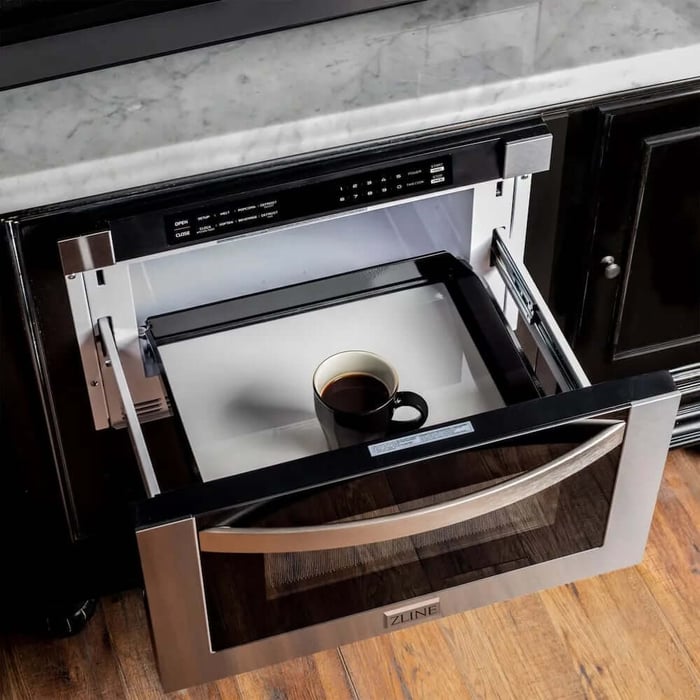
ZLINE 24 in. 1.2 cu. ft. Built-in Microwave Drawer in Stainless Steel (MWD-1)

$1,159.99
$1,449.99
The ZLINE 24 in. 1.2 cu. ft. Built-in Microwave Drawer in Stainless Steel (MWD-1) provides a professional culinary experience by pairing everyday convenience with a timeless style. Achieve ZLINE Attainable Luxury® excellence with unrivaled performance designed to enhance your kitchen’s… Read More
Improved Functionality and Performance
A microwave drawer operates differently from traditional models because it loads from the top rather than the front. Instead of swinging a door open, the drawer slides out smoothly, giving you direct access to the cooking cavity.
This top-down perspective makes everyday tasks easier. You can stir soups, check reheated leftovers, or season dishes without lifting them out of the microwave entirely. The design also reduces the risk of spills when handling hot liquids.
Despite their compact appearance, most microwave drawers are surprisingly spacious. Standard models in 24-inch or 30-inch configurations typically provide enough depth to accommodate tall mugs, mixing bowls, and large casserole dishes while delivering cooking power comparable to many traditional microwaves.
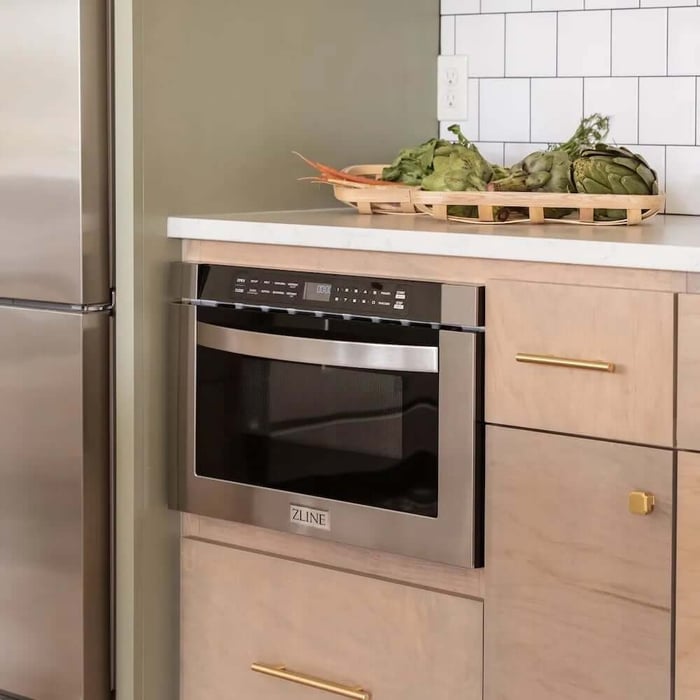
Where Microwave Drawers Work Best in Kitchen Design
One of the biggest advantages of microwave drawers is their flexibility within a kitchen layout. Because they install into base cabinetry, designers can position them in areas that improve overall kitchen workflow rather than forcing them into a wall cabinet or above the range.
Kitchen islands are one of the most popular placements. Installing a microwave drawer in the island keeps it accessible while removing it from the primary cooking zone, which reduces congestion around the cooktop.
Another common strategy is placing the microwave drawer near the refrigerator or pantry to create a dedicated snack station. This allows family members to heat leftovers or prepare quick meals without interrupting someone who is actively cooking.
Some homeowners also integrate microwave drawers into beverage centers or coffee stations. When paired with undercounter refrigeration or storage drawers, this setup creates a highly functional secondary prep area that supports entertaining and everyday convenience.
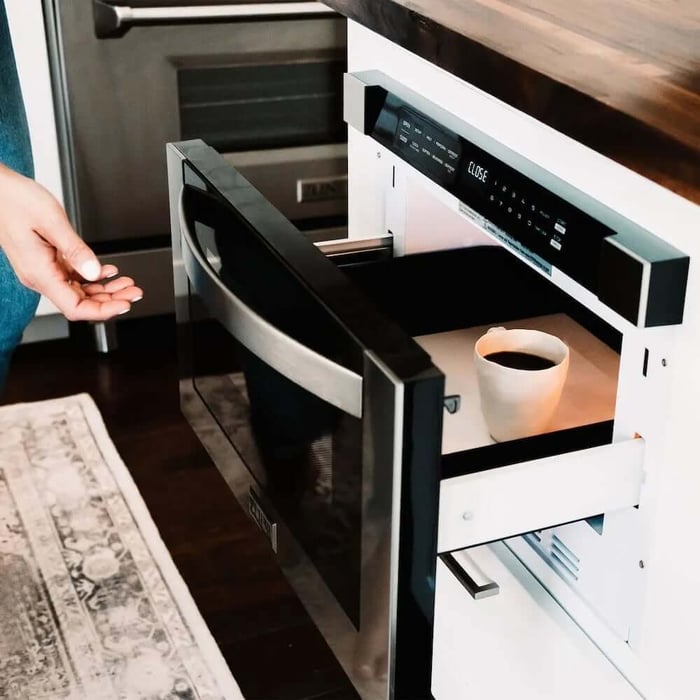
Microwave Drawer vs. Traditional Microwave
For many shoppers, the decision ultimately comes down to how microwave drawers compare to standard countertop or over-the-range models.
Traditional microwaves are generally less expensive and easier to install because they can simply sit on a countertop or be mounted within existing cabinetry. However, they often take up valuable space and can disrupt the visual flow of a modern kitchen.
Microwave drawers, on the other hand, are designed to integrate seamlessly with cabinetry. They eliminate countertop clutter, improve accessibility, and allow for more intentional kitchen layouts. Their sliding drawer design also makes it easier to handle large dishes and hot liquids.
The tradeoff is that microwave drawers typically come with a higher upfront cost and require planning during the cabinetry design phase. However, for homeowners prioritizing kitchen aesthetics and long-term functionality, the investment is often worthwhile.
Installation and Planning Considerations
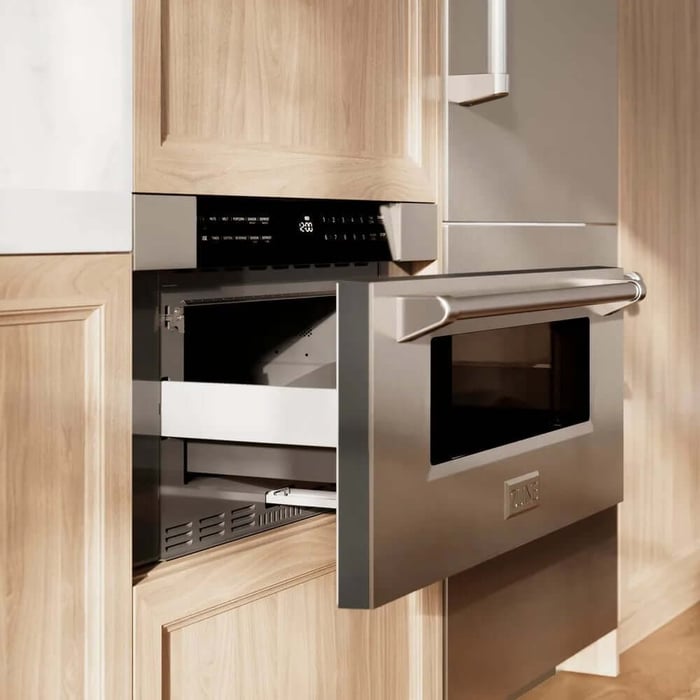
Because microwave drawers are built-in appliances, they require a bit more planning than countertop models. Most units are designed to fit within standard 24-inch or 30-inch base cabinets, with manufacturer-provided cutout dimensions.
Electrical placement is also important. Microwave drawers typically require a dedicated outlet installed inside the cabinet cavity where the appliance will sit. Planning this during the design or remodeling phase ensures a clean installation without visible cords.
Cabinet height should also be considered carefully. While many homeowners place microwave drawers below the countertop, some install them slightly higher within a base cabinet stack to achieve the most comfortable access point.
Working with a designer or cabinet professional can help ensure the microwave drawer is positioned in a location that supports both daily convenience and overall kitchen flow.
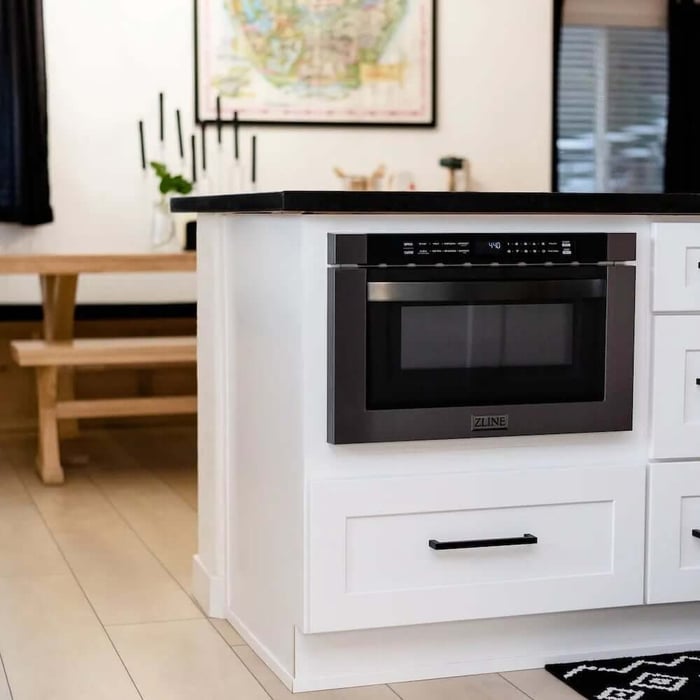
ZLINE 24 in. 1.2 cu. ft. Built-in Microwave Drawer in Black Stainless Steel (MWD-1-BS)

$1,199.99
$1,499.99
The ZLINE 24 in. 1.2 cu. ft. Built-in Microwave Drawer in Black Stainless Steel (MWD-1-BS) provides a professional culinary experience by pairing everyday convenience with a timeless style. Achieve ZLINE Attainable Luxury® excellence with unrivaled performance designed to enhance your… Read More
Is a Microwave Drawer Right for You?
While the upfront cost of a microwave drawer is usually higher than that of a basic countertop unit, the long-term value often lies in improved kitchen workflow and design flexibility.
Homeowners remodeling their kitchens, designing for aging in place, or simply looking to eliminate countertop clutter often find that a microwave drawer offers a cleaner and more functional solution. The ability to integrate the appliance into cabinetry while improving accessibility makes it particularly appealing in modern kitchen designs.
Pro Tip: When planning your layout, consider placing the microwave drawer near your refrigerator or main prep island. This creates a dedicated snack or prep zone that keeps everyday tasks from interfering with the main cooking triangle.
Ready to browse?
If you're looking for a specific recommendation to start your journey, the ZLINE Microwave Drawer Collection offers a variety of finishes, including Black Stainless and their signature Autograph Edition, allowing you to match the appliance to the overall aesthetic of your kitchen while maintaining a seamless built-in appearance.
If you’re ready to explore microwave drawers, call us at 1 (877) 529-5413 or book a consultation with one of our product experts!
Connect with us on social media!
FAQs
What is a microwave drawer?
A microwave drawer is a built-in microwave that opens by sliding out like a drawer instead of swinging open with a front door. It is typically installed into base cabinetry or a kitchen island, allowing the appliance to sit below the countertop and blend seamlessly into the kitchen design.
Are microwave drawers as powerful as traditional microwaves?
Yes. Most microwave drawers offer cooking power comparable to standard countertop microwaves, typically around 950 to 1,000 watts. Despite their sleek built-in appearance, they are capable of reheating leftovers, defrosting food, and cooking everyday meals just like traditional microwave models.
Do microwave drawers save counter space?
One of the main advantages of a microwave drawer is that it removes the appliance from the countertop entirely. By installing the microwave within lower cabinetry, homeowners reclaim valuable prep space while creating a cleaner, more streamlined kitchen layout.
Where should a microwave drawer be installed in a kitchen?
Microwave drawers are most commonly installed in kitchen islands, base cabinets near the refrigerator, or within a dedicated snack or beverage station. Placing the microwave outside the main cooking zone helps reduce congestion around the cooktop while keeping the appliance accessible for everyday use.
Are microwave drawers easier to use than traditional microwaves?
Many homeowners find microwave drawers more ergonomic because they eliminate the need to reach overhead into a cabinet or above the stove. The drawer design allows users to place dishes into the microwave from above, which makes it easier to handle heavy bowls or hot liquids.
Do microwave drawers require special installation?
Yes. Microwave drawers are built-in appliances that require a properly sized cabinet opening and a dedicated electrical outlet within the cabinet cavity. Most models are designed to fit within standard 24-inch or 30-inch base cabinets, but installation should be planned during cabinetry design or kitchen remodeling.
Are microwave drawers more expensive than standard microwaves?
In general, microwave drawers cost more than basic countertop or over-the-range microwaves because they are designed as built-in appliances. However, many homeowners see the higher upfront investment as worthwhile due to the improved kitchen aesthetics, increased counter space, and better overall workflow.
Can microwave drawers fit large dishes?
Yes. Although the appliance is compact in appearance, most microwave drawers are designed with a deep cooking cavity that accommodates tall mugs, mixing bowls, and many casserole dishes. The sliding drawer also makes it easier to access and stir food during heating.
Are microwave drawers safe for families and older homeowners?
Microwave drawers are often considered a safer option because they reduce the need to lift hot food overhead. Installed at waist or counter height, they allow users to access heated dishes more comfortably, which aligns well with universal design and aging-in-place kitchen planning.
Are microwave drawers worth it for a kitchen remodel?
For homeowners prioritizing clean design, better ergonomics, and improved kitchen workflow, microwave drawers are often considered a worthwhile upgrade. Integrating the microwave into cabinetry helps reduce visual clutter while allowing more flexibility in the overall kitchen layout.